Union Pacific Corporation (UNP) is one of North America's largest freight railroads, operating a vast network across the western two-thirds of the United States. As a critical player in the transportation and logistics sector, Union Pacific faces competition from other major railroads, as well as from companies that supply equipment and services to the rail industry. Understanding Union Pacific’s competitive landscape is essential for investors, industry observers, and anyone interested in the dynamics of North American freight transportation.
Key Competitors and Peers
Below is a bulleted list of Union Pacific’s main competitors and peers, including both direct railroad rivals and major suppliers to the rail industry:
- BNSF Railway (not publicly traded, but Union Pacific’s primary direct rail competitor in the western U.S.)
- CSX Corporation (CSX) – Major eastern U.S. freight railroad
- Norfolk Southern Corporation (NSC) – Major eastern U.S. freight railroad, recently entered into a merger agreement with Union Pacific
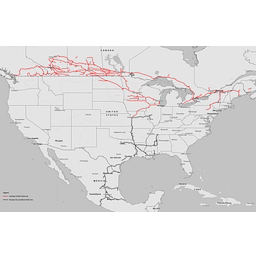
- Canadian Pacific Kansas City Ltd. (CP) – Only freight railway spanning Canada, the U.S., and Mexico
- Westinghouse Air Brake Technologies Corp. (WAB) – Leading rail equipment and technology supplier
- Greenbrier Companies, Inc. (GBX) – Major railcar manufacturer and service provider
- Trinity Industries, Inc. (TRN) – Leading provider of railcar products and services


Competitors and Peers Table
| Ticker | Company Name | Subsector | Market Cap |
|---|---|---|---|
| UNP | Union Pacific Corp. | Railroads | $150.79B |
| CSX | CSX Corp. | Railroads | $74.29B |
| NSC | Norfolk Southern Corp. | Railroads | $68.01B |
| CP | Canadian Pacific Kansas City Ltd. | Railroads | $74.48B |
| WAB | Westinghouse Air Brake Technologies Corp. | Railroads | $41.72B |
| GBX | Greenbrier Companies, Inc. | Railroads | $1.69B |
| TRN | Trinity Industries, Inc. | Railroads | $2.55B |
Union Pacific vs. CSX Corporation (CSX)
- Geography: Union Pacific operates in the western two-thirds of the U.S., while CSX’s network is concentrated in the eastern U.S., serving every major market east of the Mississippi.
- Competitive Positioning: CSX’s primary rail competitor is Norfolk Southern, but it notes that a merger between NSC and Union Pacific could significantly alter the competitive landscape.
- Product Lines: Both companies have diversified freight offerings, but CSX emphasizes merchandise, intermodal, coal, and trucking, with strong port and short-line connections.
Union Pacific vs. Norfolk Southern Corporation (NSC)
- Geography: Like CSX, Norfolk Southern is focused on the eastern U.S., with the most extensive intermodal network in that region.
- Merger Agreement: NSC has entered into a merger agreement with Union Pacific, aiming to integrate complementary networks for more efficient nationwide service.
- Product Lines: NSC’s business is divided into merchandise, intermodal, and coal, similar to Union Pacific’s diversified mix.
Union Pacific vs. Canadian Pacific Kansas City Ltd. (CP)
- Geography: CPKC is unique as the only freight railway spanning Canada, the U.S., and Mexico, offering single-line service across North America.
- Competitive Differentiation: CPKC’s Mexico Midwest Express and long grain trains provide truck-competitive options, while Union Pacific’s strength is in connecting Pacific/Gulf ports with U.S. inland markets.
- Product Lines: Both companies transport bulk, merchandise, and intermodal freight, but CPKC’s cross-border reach is a key differentiator.
Union Pacific vs. Westinghouse Air Brake Technologies Corp. (WAB)
- Business Model: Wabtec is not a direct rail operator but a major supplier of locomotives, components, and digital solutions to railroads, including Union Pacific.
- Competitive Positioning: Wabtec’s competition is with other OEMs and technology providers, not with Union Pacific’s freight operations.
Union Pacific vs. Greenbrier Companies, Inc. (GBX)
- Business Model: Greenbrier manufactures and services railcars, supplying equipment to railroads like Union Pacific rather than competing in freight transportation.
- Competitive Positioning: Greenbrier’s main competition is with other railcar manufacturers and service providers.
Union Pacific vs. Trinity Industries, Inc. (TRN)
- Business Model: Trinity is a leading provider of railcar products and services, serving railroads, shippers, and leasing companies.
- Competitive Positioning: Like Greenbrier, Trinity’s competition is in the railcar manufacturing and leasing space, not in operating rail networks.
Conclusion
Union Pacific (UNP) stands as a dominant force in western U.S. freight rail, with its primary direct competition coming from other Class I railroads such as CSX (CSX), Norfolk Southern (NSC), and Canadian Pacific Kansas City (CP). The competitive landscape is evolving, particularly with the announced merger between Union Pacific and Norfolk Southern, which could reshape the industry’s structure. While companies like Wabtec (WAB), Greenbrier (GBX), and Trinity (TRN) are not direct competitors, they play vital roles as suppliers and partners within the broader rail ecosystem. Understanding these relationships and distinctions is crucial for assessing Union Pacific’s strategic position and future prospects.